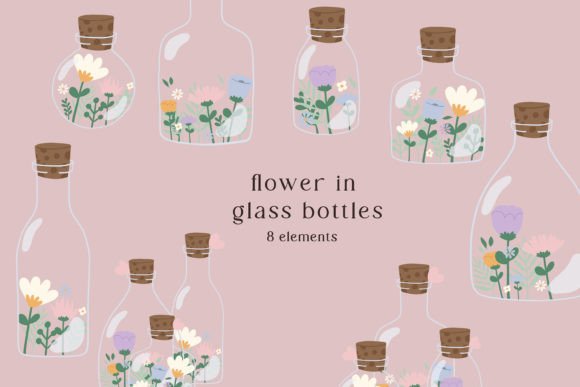
★★★★☆4.4(293 reviews)
Cute Flower in Glass Bottles Clip Art Review for Real Embroidery Projects
Where to Use Carefully
- Small Hoop Sizes: The design has enough detail to potentially get lost in tight spaces. If you’re working with a hoop under 4 inches, simplify or scale down the design to preserve clarity.
- Textured Fabrics: Stitching on denim or canvas can create a rugged contrast that might clash with the softness of the design. Test on scrap fabric to ensure the texture doesn't overpower the embroidery.
- Stretchy or Thin Fabric: Stretchy materials like jersey or thin cottons can cause distortion. Stabilization is key here.
- Dark Backgrounds: While the design looks stunning on light fabrics, it may require additional layers or brighter thread colors to remain visible on darker ones.
- Curved Surfaces: Embroidering on a curved surface like a cap or a round mug requires careful placement and possibly adjusting the design shape for better adhesion and appearance.
- Dense Stitch Areas: The glass bottle outlines use satin stitches, which can become bulky on thinner materials. Be mindful of stitch density to avoid puckering or tearing.
Practical Designer Notes for Implementation
- Test on Scrap Fabric: Always do a trial run to see how the design behaves with your machine and thread choices.
- Check Thread Color Contrast: Lighter thread colors tend to show more detail on white backgrounds, but darker threads can give a bolder look for muted tones.
- Review Stitch Density: Make sure the satin and fill stitches aren’t too tight, which can lead to puckering, or too loose, which may appear sloppy.
- Confirm Hoop Size: If the original file doesn’t specify, check the dimensions yourself. Oversizing the design to fit a larger hoop can help maintain proportionality.
- Inspect Small Details: Look at the flower petals and bottle curves—these should remain smooth and not jagged after digitizing.
- Use Proper Stabilizer: Depending on your fabric, choose between wash-away, tear-away, or cut-away stabilizers to prevent shifting during embroidery.
- Test in Black and White Mockups: This helps determine how the design will look without color, useful for grayscale prints or monochromatic embroidery.
- Compare Light and Dark Fabrics: Ensure the design remains legible and attractive regardless of background tone.
- Confirm Licensing Before Selling: Since the design is categorized as Graphics and Illustrations, verify whether it allows for commercial use. Some clip art sets restrict resale of finished products unless explicitly stated.
⬇️ Download Free
Free download · No sign-up required
🔗 You Might Also Like
Illustrations
As a designer who regularly evaluates embroidery files for real-world use, I alw...
Illustrations
As an embroidery designer and product reviewer with years of hands-on experience...
Illustrations
As an embroidery designer with years of hands-on experience, I’ve tested countle...
Illustrations
As an experienced embroidery designer who’s stitched everything from personalize...
Illustrations
As an experienced embroidery designer and product reviewer, I often find myself ...
